Future of Urban Transit
Service design · 2021
Partners Marvin Bruns, Till Troll, Jonathan Wellmann · Organization University of Applied Sciences Potsdam
The project builds on the OECD's Urban Mobility System Upgrade, which simulates our mobility 30 years from now. Sharing one scenario gave everyone the same base assumptions, which matters when imagined futures get blurry. Strongly simplified, it assumes:
- An on-demand car within 5 to 10 minutes
- Far fewer cars through higher utilisation (5–10% of today's vehicles cover our current mobility)
- Shorter travel times thanks to the space gained
- On-demand mobility services in crowded areas
Autonomous musicians
After mapping typical user groups like families and business travellers, we picked a less obvious one: musicians. Bands have unusual needs, and we expected them to push our idea of an autonomous world in a new direction.
None of us are musicians, so we started with expert interviews about planning and playing gigs in different settings, for small and big bands alike. Three insights stood out:
»The smallest car possible is rented, the main thing is it works.«
»At least one year in advance. Because the venues are fully booked for at least one year.«
»Sometimes it's only at the end that you realise a car isn't enough.«
A competitor analysis showed most rental services are on-demand, which doesn't work for planning a tour half a year ahead.
The vehicle is the stage
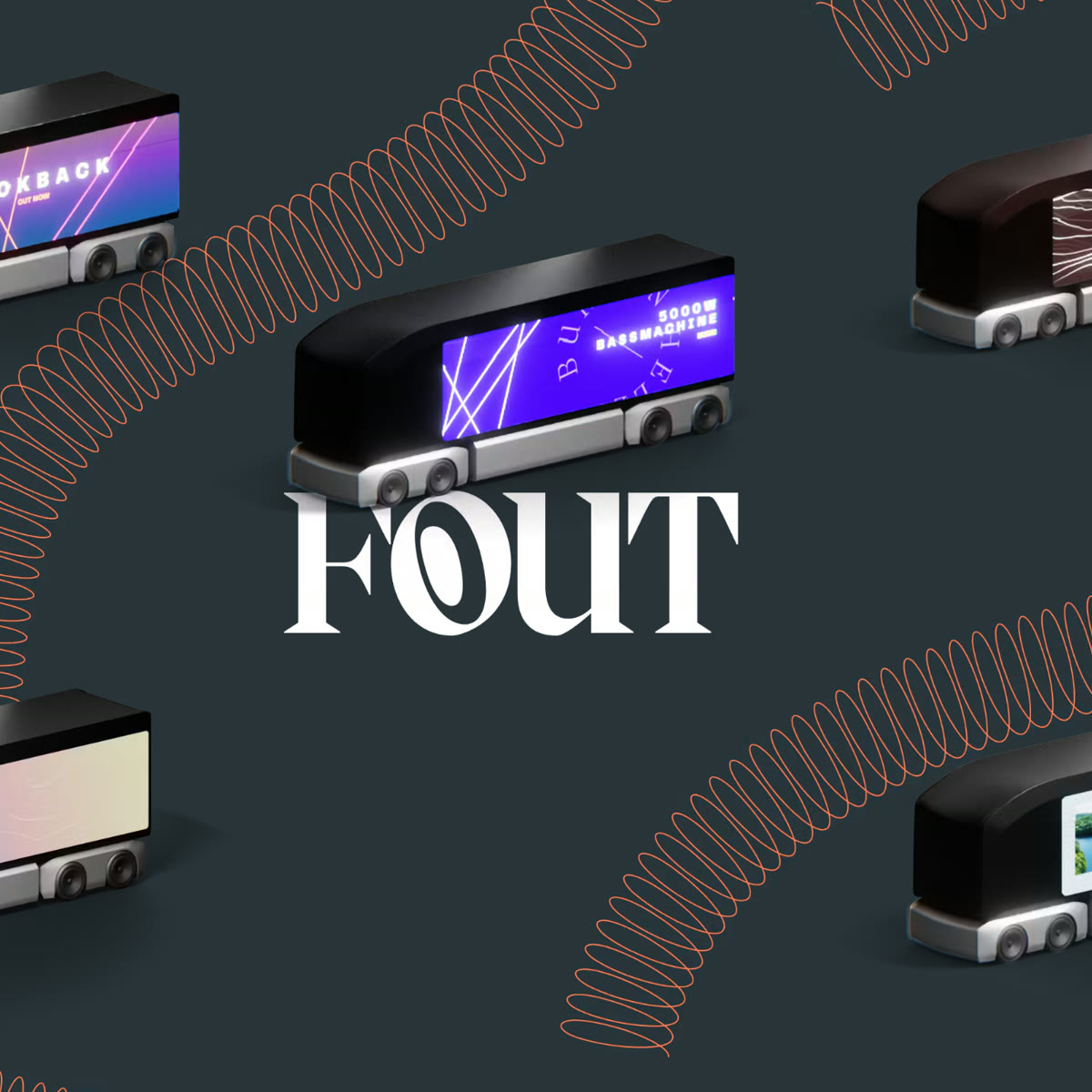
So we asked: what if an autonomous vehicle could serve as the stage itself? With two industrial designers on the team, we could think the vehicle through in detail.
We built on the »skateboard architecture«, which separates the driving base from an interchangeable top. A vehicle big enough to be a stage is truck-sized, and just like a cab and trailer connect via the kingpin, our modules can separate and stand on their own on the fly. The idea went from Till's first sketches to a detailed 3D model.
The interface
We started with low-fi screens: a map of everywhere your band can play, through to booking, customising and paying for the vehicle. We also experimented with 3D photogrammetry scenes to preview your stage in the real world, but dropped it. It took a lot of time and wasn't what our users' problems were about, so we pivoted to a simpler view and solved the real problems first.
Résumé
Focusing on a group you wouldn't think of first sent us in a completely new direction, towards a skateboard architecture instead of the vehicles we have today. Not everyone has a band, but the concept shows how many needs there are to cover as we move towards autonomous mobility.
A huge thank you to Ignazio Moresco, our professor and mentor, whose experience helped turn the idea into a result we're all confident in.